Best Hot Springs Near Glen Canyon National Recreation Area
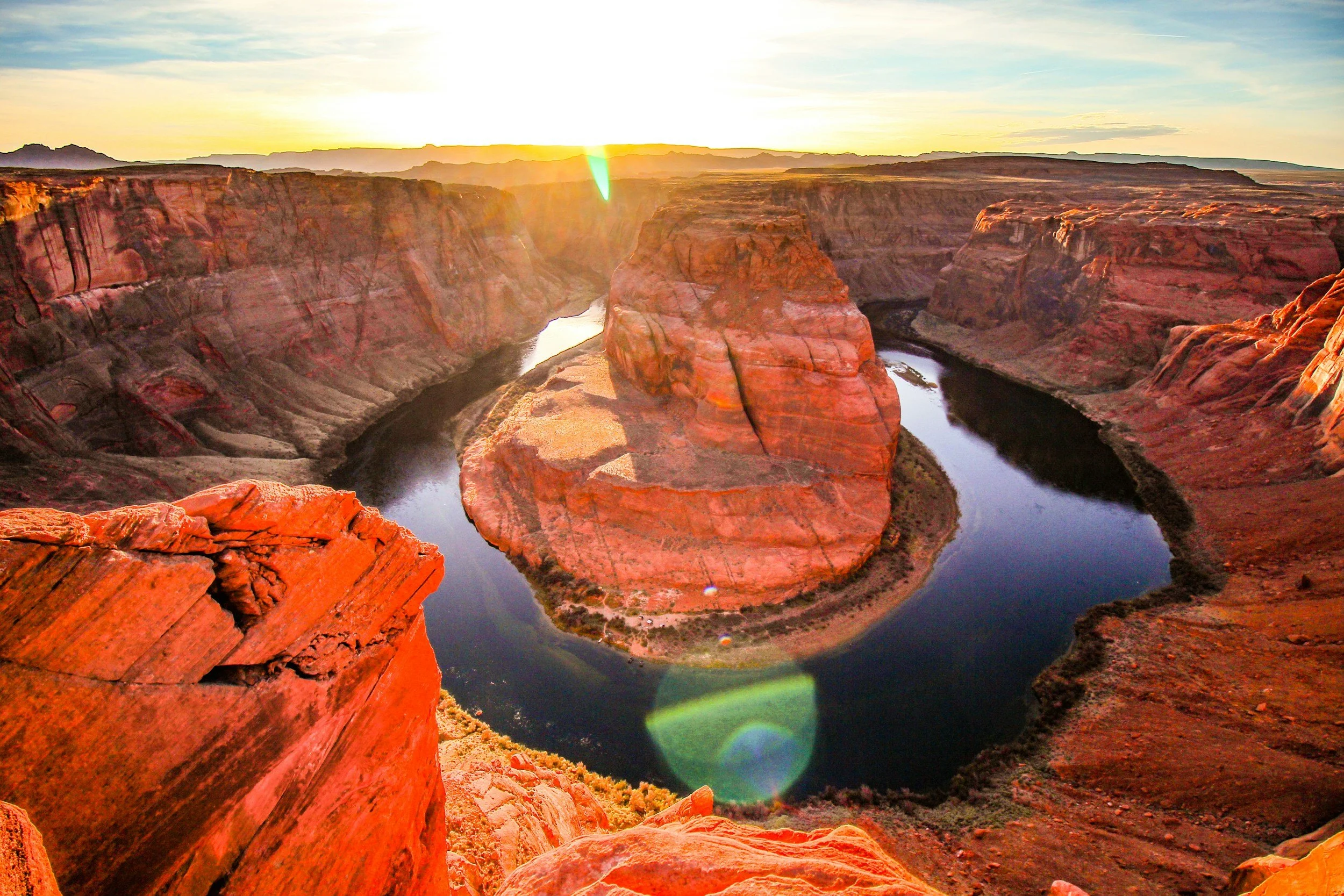
Glen Canyon is a landscape of profound absence. It is a place where the Colorado River was famously "stilled" to create Lake Powell, a vast reservoir that drowned a labyrinth of sandstone cathedrals. But for the thermal enthusiast and the researcher of geological history, Glen Canyon represents a fascinating intersection of deep-earth heat and high-desert hydrology.
Visiting the hot springs and spas near Glen Canyon and Page, Arizona, requires a shift in perspective. You are not just looking for a soak; you are navigating the "Grand Circle"—a geological ring that encompasses some of the most specialized thermal chemistry in the United States. By supporting non-profit parks like Astoria (further north) and ESG-conscious resorts like Amangani, we ensure that the "heat" of the Colorado Plateau remains a source of healing rather than a victim of our own curiosity. The desert is a place of absence, but in its thermal waters, we find a hidden, pulsing presence that reminds us of the Earth’s enduring power.
1. Amangiri - Aman Spa
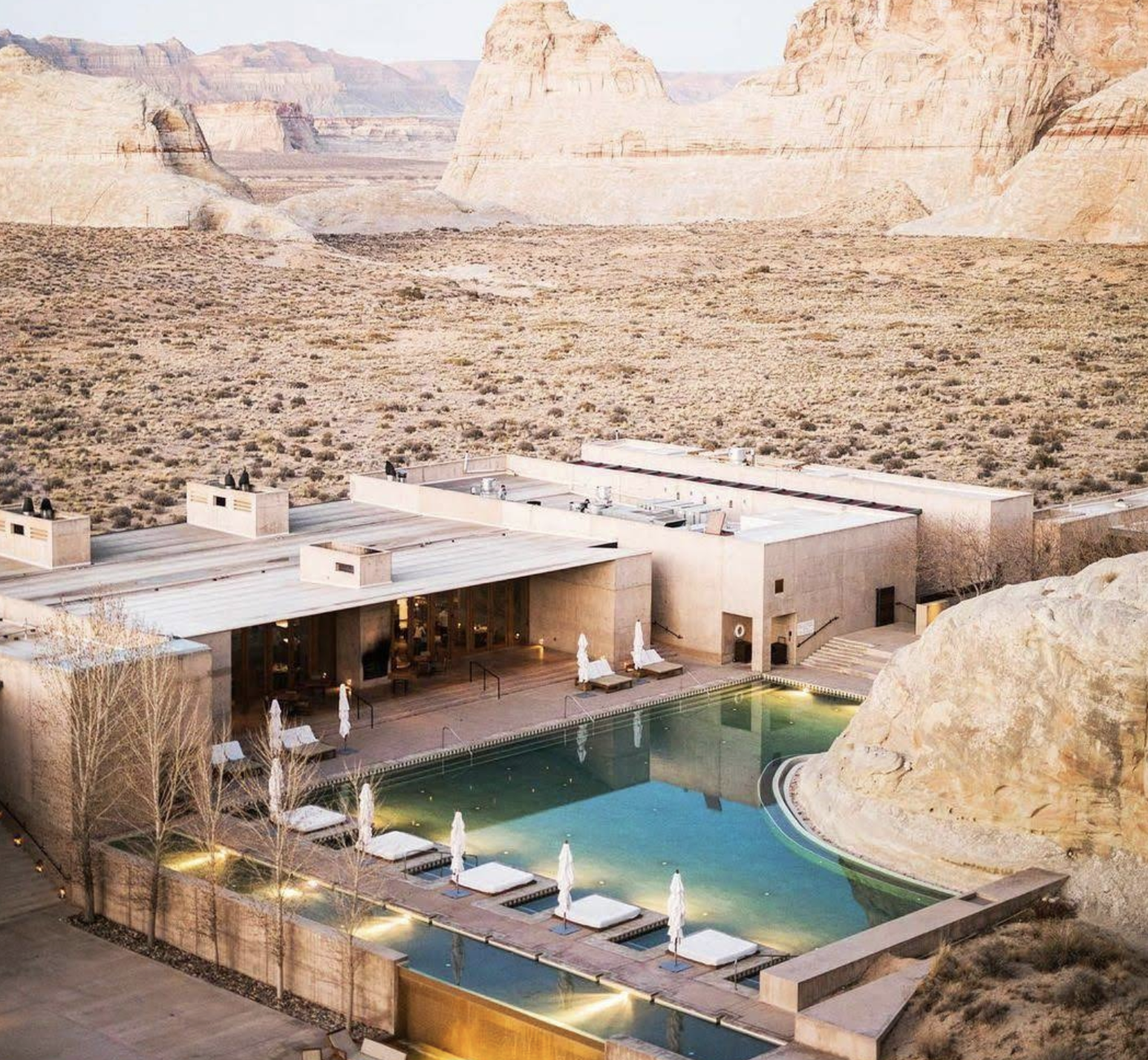
Located just minutes from the Glen Canyon boundary, Amangiri is the ultimate expression of desert wellness. Built into a protected valley with views of the Grand Staircase-Escalante, the spa is a 25,000-square-foot sanctuary. It utilizes the "lithic" energy of the surrounding Navajo Sandstone to offer treatments that are as much about the silence of the desert as they are about the water.
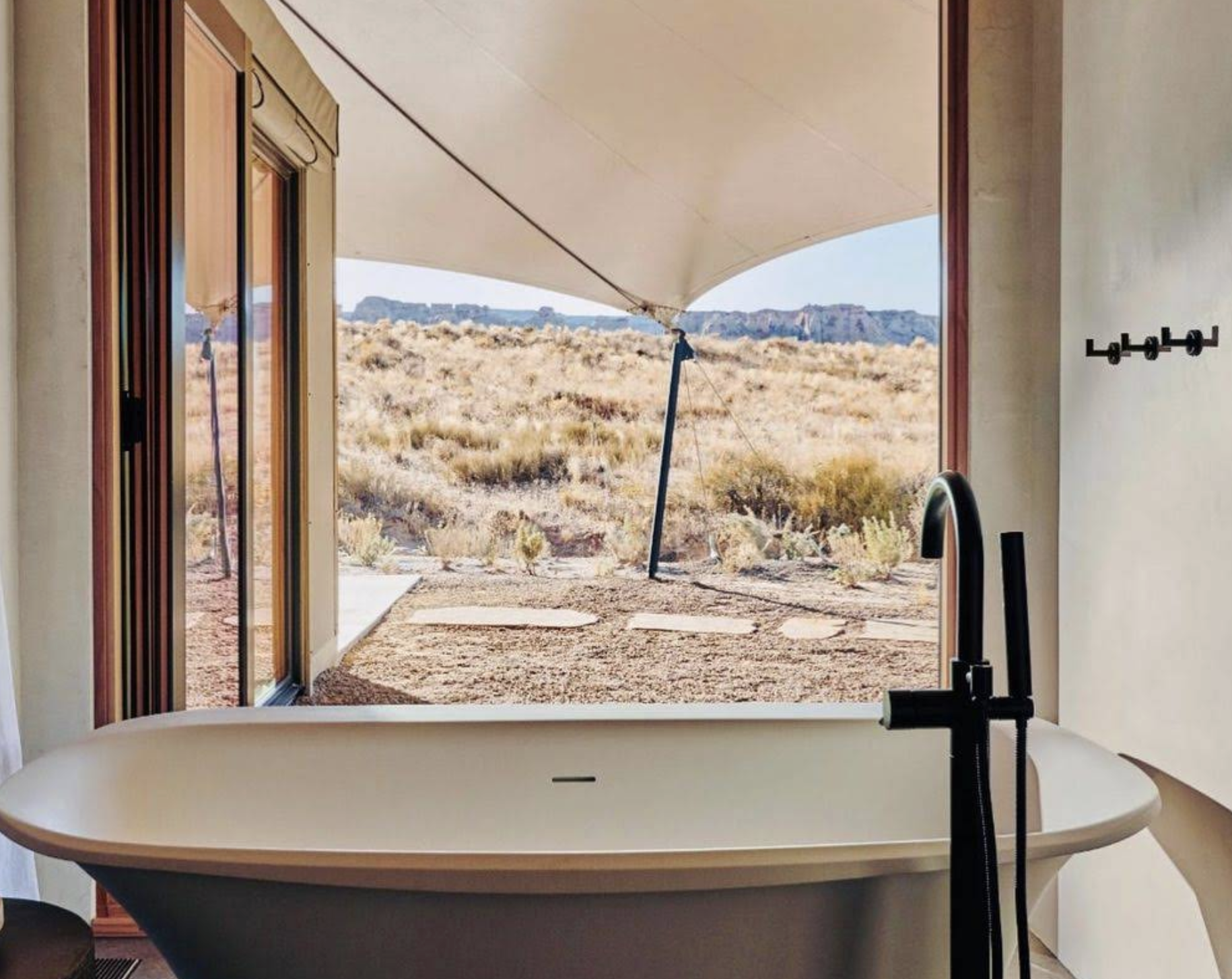
Water Quality: 5 stars. Pristine. The pools are maintained to a clinical standard of clarity, appearing like liquid glass against the desert stone.
Ease of Access: 5 stars. Accessible via a private paved road. Once on-property, the transitions between the lounge, pool, and treatment rooms are effortless.
Ability to be Alone: 5 stars. The resort is designed for absolute privacy. Even when at capacity, the layout ensures you rarely encounter other guests in the thermal suites.
Water Temperature: 5 stars. Features a heated pool wrapped around a 165-million-year-old rock escarpment, plus precision-controlled steam rooms and saunas.
Health Benefits: 4 stars. Focuses on the "Aman Wellness" philosophy, utilizing desert minerals and salts in their specialized "Grounding" and "Purifying" treatments.
Nearby Amenities: 5 stars. Unmatched. From the "Spirit Journey" dining to the luxury suites, every necessity is a world-class experience.
2. Mystic Hot Springs
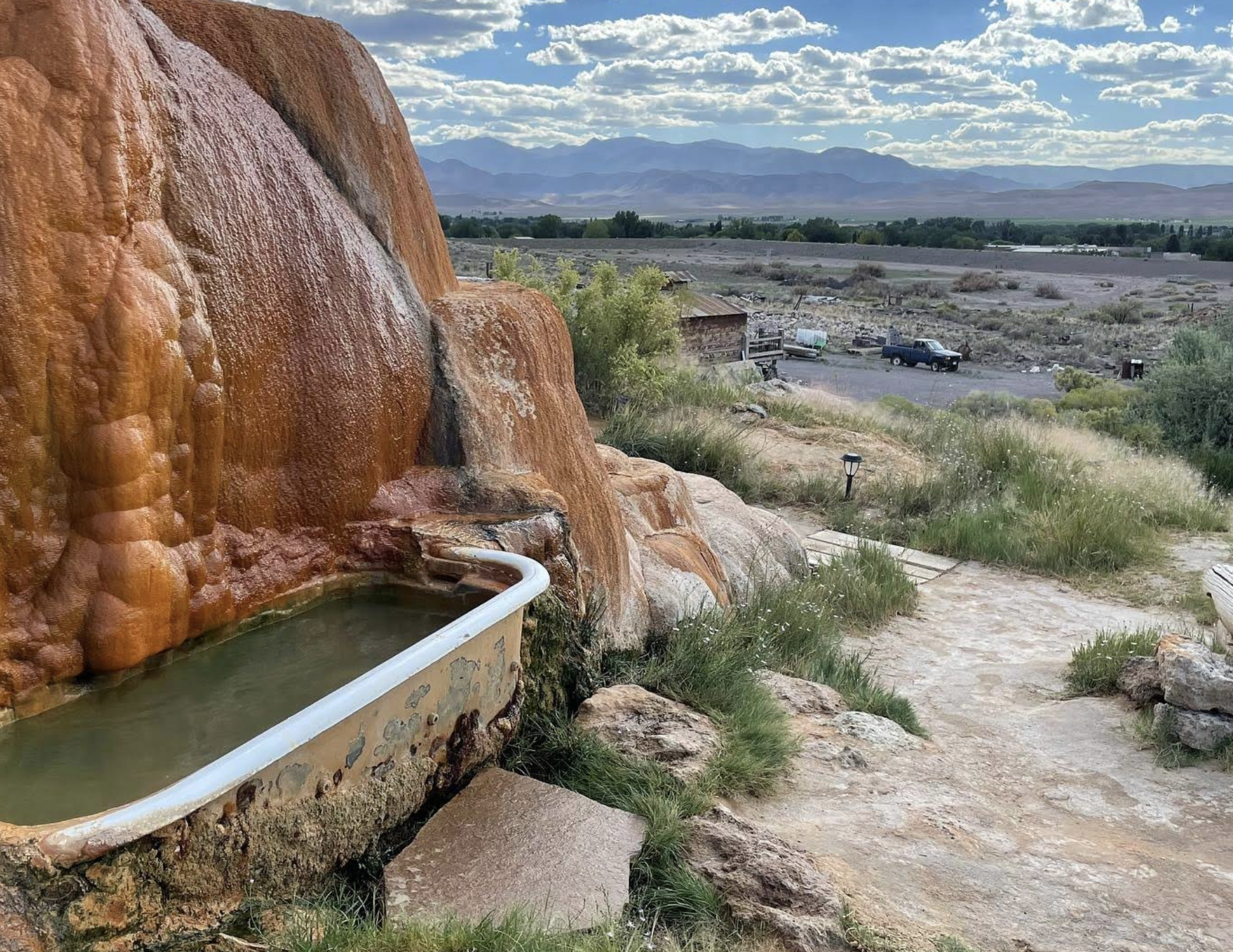
For the traveler heading north from Glen Canyon towards Utah, Mystic Hot Springs is the iconic "travertine" stop. Here, the water is so rich in calcium carbonate that it has built massive, orange-hued mounds over decades. The vintage bathtubs and stone pools offer a raw, bohemian contrast to the slick-rock luxury of Page.
Mystic Hot Springs is easily accessible off highway I-70, in the small town of Monroe in Central Utah. The exact address is 475 E. 100 N., Monroe, UT.
The hot mineral water emerges from the spring at 168 °F (76 °C). The water flows into two smaller pools with temperatures between 92 and 102 °F (33 and 39 °C).
There are 15 cabins at different stages of restoration as well as several converted hippie buses, some available to rent. Soaking passes are included in lodging.
Water Quality: 3 stars. The high mineral content creates significant sediment and "iron staining." While natural, it lacks the "crystal clear" look of filtered resorts.
Ease of Access: 5 stars. Paved roads lead directly to the site in Monroe, UT, with clear signage and easy parking.
Ability to be Alone: 3 stars. A favorite for photographers and "van-life" travelers. You will likely share the larger pools, though the individual tubs offer some solitude.
Water Temperature: 4 stars. The water emerges at 168°F and is cooled as it travels through the travertine channels; tubs vary between 98°F and 110°F.
Health Benefits: 5 stars. Exceptionally high in iron, calcium, and magnesium. It is known for its "softening" effect on the skin and joint relief.
Nearby Amenities: 3 stars. Offers quirky lodging in converted school buses and a small general store; more services are available in nearby Richfield.
3. Arizona Hot Springs
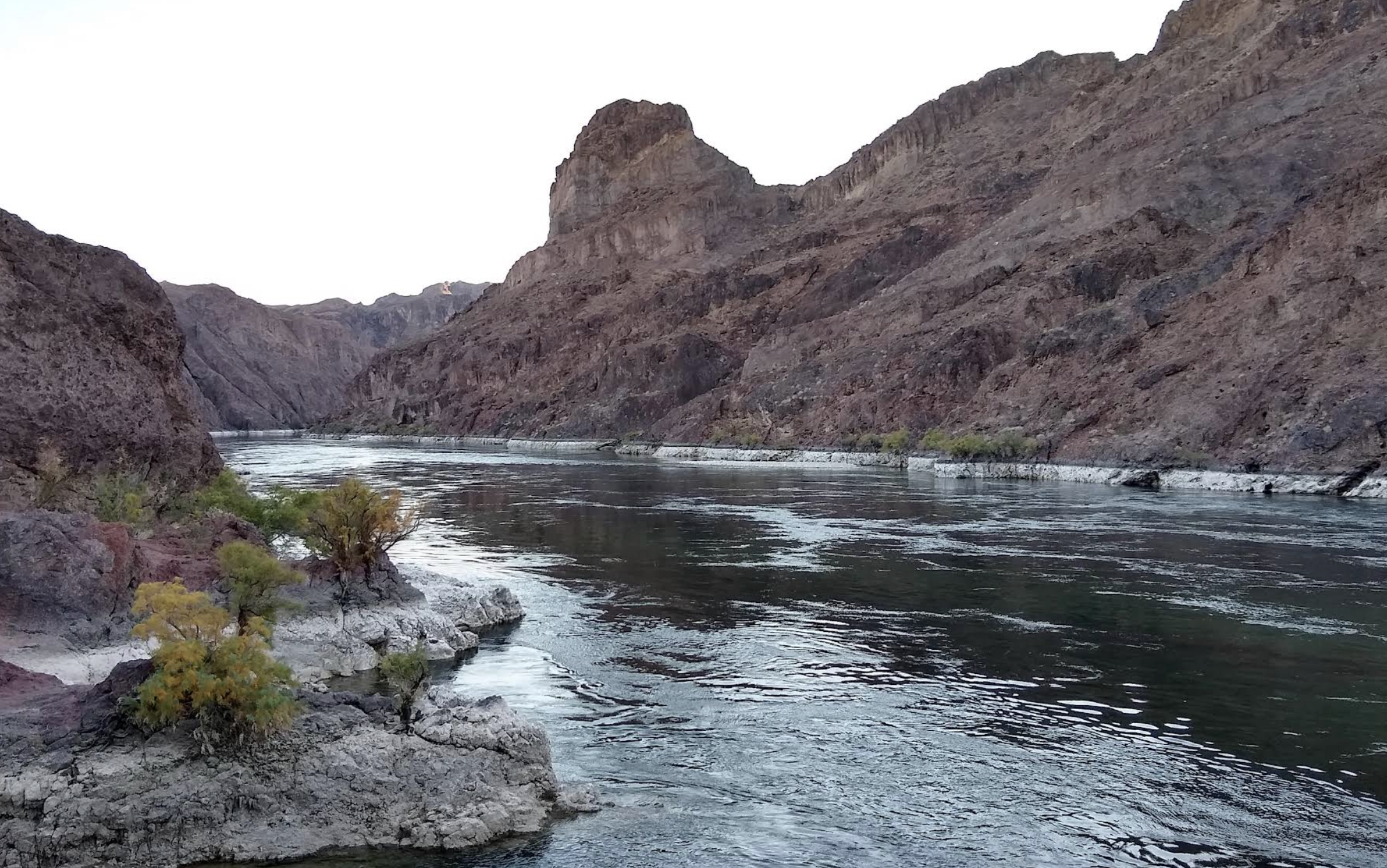
If you’ve been to Arizona or the southwest US, you know the blazing heat of the summer is not the best time to be looking for hot springs. Located south of the Hoover Dam but frequently visited by those exploring the Glen Canyon/Lake Mead corridor, Arizona hot springs are the definitive "wild" desert experience. They sit in a sheer-walled slot canyon where 111°F water cascades over a 20-foot ladder into sandbagged pools.
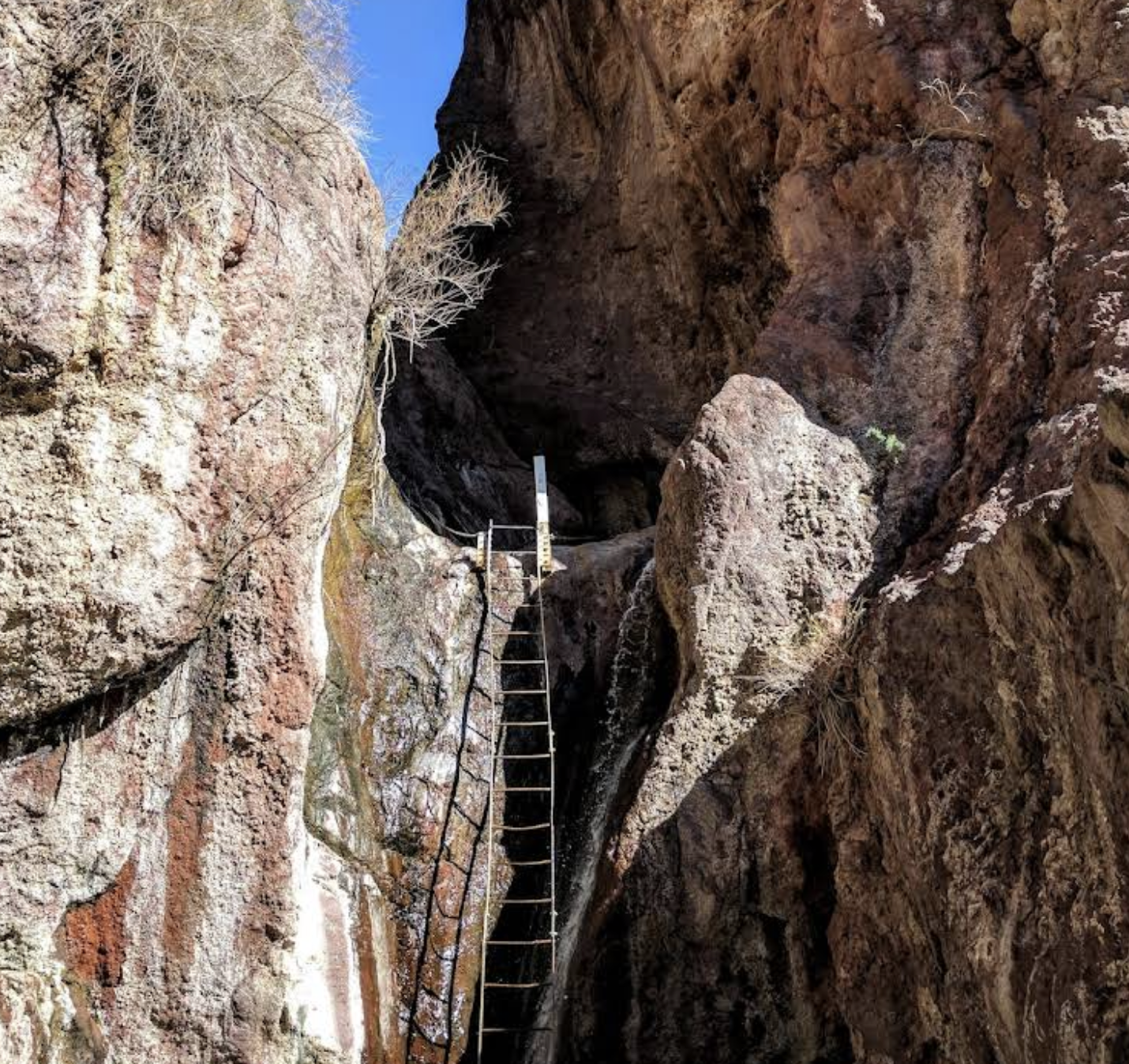
Part of the magic of Arizona Hot Spring at Lake Mead Recreation Area is actually getting there. Visiting the spring—nestled between the narrow rock walls of a slot canyon—requires travel by boat on the Colorado River, or hiking on foot for 2.5 miles.
The water temperature of the spring ranges from 111 to 120 degrees Fahrenheit. Please know that the springs are free-flowing, and alterations are NOT permitted.
Water Quality: 4 stars. Generally clear, but because the pools are sand-bottomed, there is minor sediment. The natural turnover is high.
Ease of Access: 2 stars. Requires a strenuous 6-mile hike or a paddle up the Colorado River. It is physically demanding and requires careful preparation.
Ability to be Alone: 2 stars. Despite the hike, its fame makes it a busy spot. You will share the narrow canyon with fellow hikers and rafters.
Water Temperature: 5 stars. The tiered pools offer a perfect gradient; if the top pool is too hot, the lower ones are usually perfect.
Health Benefits: 5 stars. Deep-seated volcanic minerals provide incredible relief for hikers; the setting offers a profound psychological reset.
Nearby Amenities: 1 star. Extremely remote. You must carry all your water, food, and emergency supplies.
4. Red Hill Hot Springs
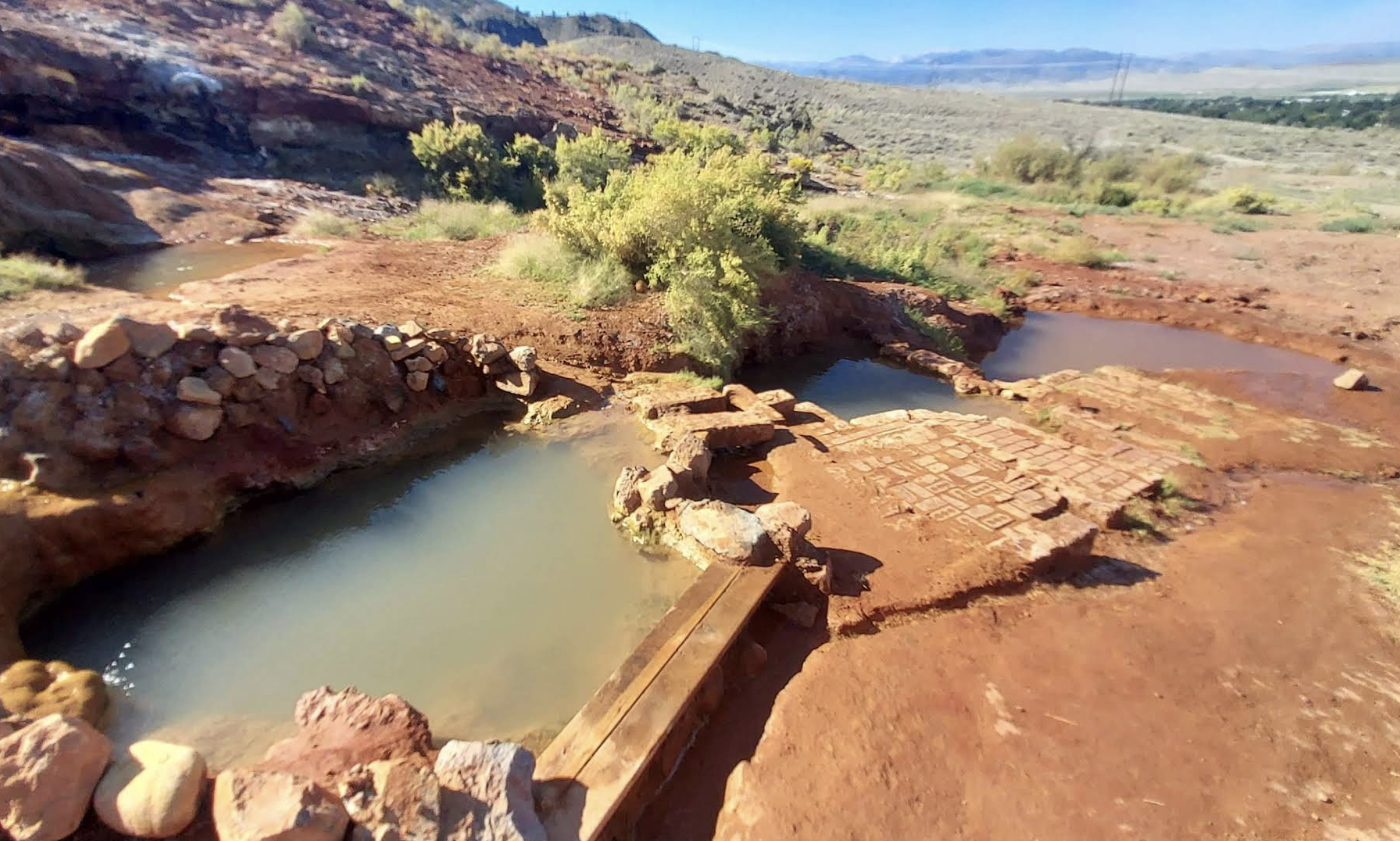
Located just down the road from Mystic, Red Hill is the "local’s choice." It is a primitive site located on a hillside where the water has painted the earth a deep, rust red. It is free to the public, embodying the "back-to-nature" spirit of the Utah desert.
The springs are just a 10-15 min detour from I-70 and an easy walk from the parking lot.
It’s up in the mountain and it’s peaceful. It has a bathroom next to it and camping spots further out. This site is free, has restrooms, bring your own water, its hot. It's open until 10pm.
It has 4 pools with different temperatures with the deepest one being the hottest. The hot springs near the bench is the hottest of the pools and the deepest (waist high), while the other pools are slightly cooler and knee-mid thigh deep.
Water Quality: 3 stars. Expect noticeable sediment and a slightly murky appearance due to the red clay and open-air exposure.
Ease of Access: 4 stars. A short, slightly steep walk from the gravel parking area. Accessible to most, but the ground can be slippery when wet.
Ability to be Alone: 2 stars. Because it is free and popular with locals, it can get crowded, especially on weekend evenings.
Water Temperature: 4 stars. Generally stays around 102°F to 105°F, making it comfortable for extended soaking in the cool desert air.
Health Benefits: 4 stars. High iron content (evidenced by the red hills) is great for circulation and skin health.
Nearby Amenities: 2 stars. No facilities on-site. It is best for a quick "soak and go" experience while transiting the region.
5. Meadow Hot Springs
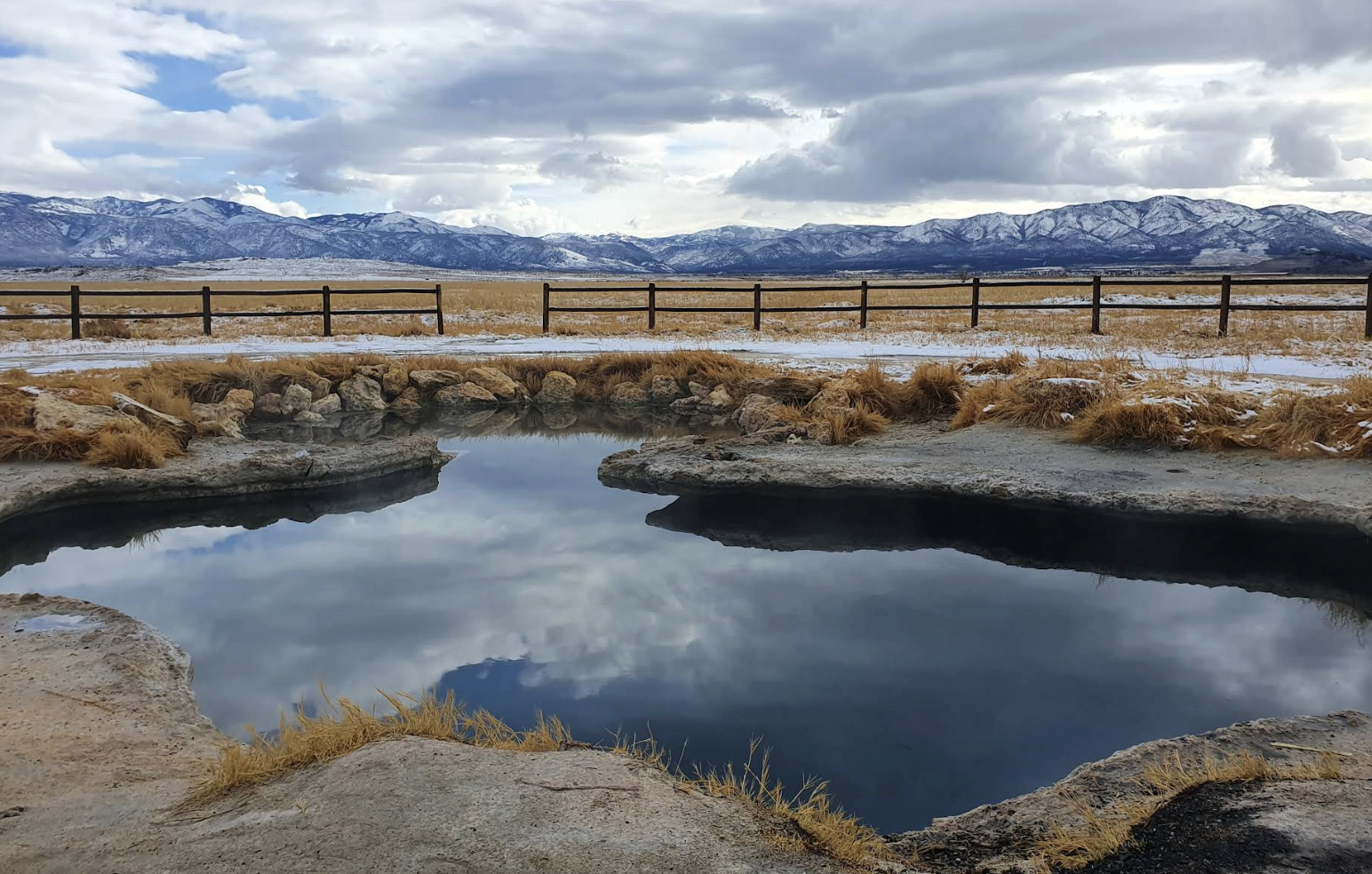
Further north but essential for the "Grand Circle" researcher, Meadow Hot Springs consists of three deep, crystal-clear pools located in a private cow pasture. The water is remarkably blue and deep enough for a "vertical soak."
Must have high clearance car with 4WD/AWD because the road is in tough condition. Park at the entrance and walk.
The pools are super deep. Bring a pool noodle or something to float. The smaller pool upfront is the hottest. The larger and further pools have fish.
What makes this place even more special is that it's located on private property, but the generous landowners allow public access. There’s no charge to visit, only a donation box to help keep it clean and maintained.
Recommend water shoes, towels and bringing your own water. No bathroom or changing facilities.
Be kind and take your trash and maybe take the trash of others too.
Water Quality: 5 stars. Stunningly clear. You can see all the way to the bottom of the deep limestone vents.
Ease of Access: 4 stars. Accessible via a flat dirt road (passable by most cars) followed by a short, flat walk through the field.
Ability to be Alone: 2 stars. Very popular with college students and travelers. It is rarely empty during daylight hours.
Water Temperature: 3 stars. The main pool is around 100°F—comfortable, but some might find it a bit "lukewarm" on a cold winter day.
Health Benefits: 3 stars. Moderate mineral content; the primary benefit is the sensory experience of the deep, clear water.
Nearby Amenities: 2 stars. No services. The landowner has provided basic trails, but you must be self-sufficient.
6. Under Canvas Lake Powell - Grand Staircase
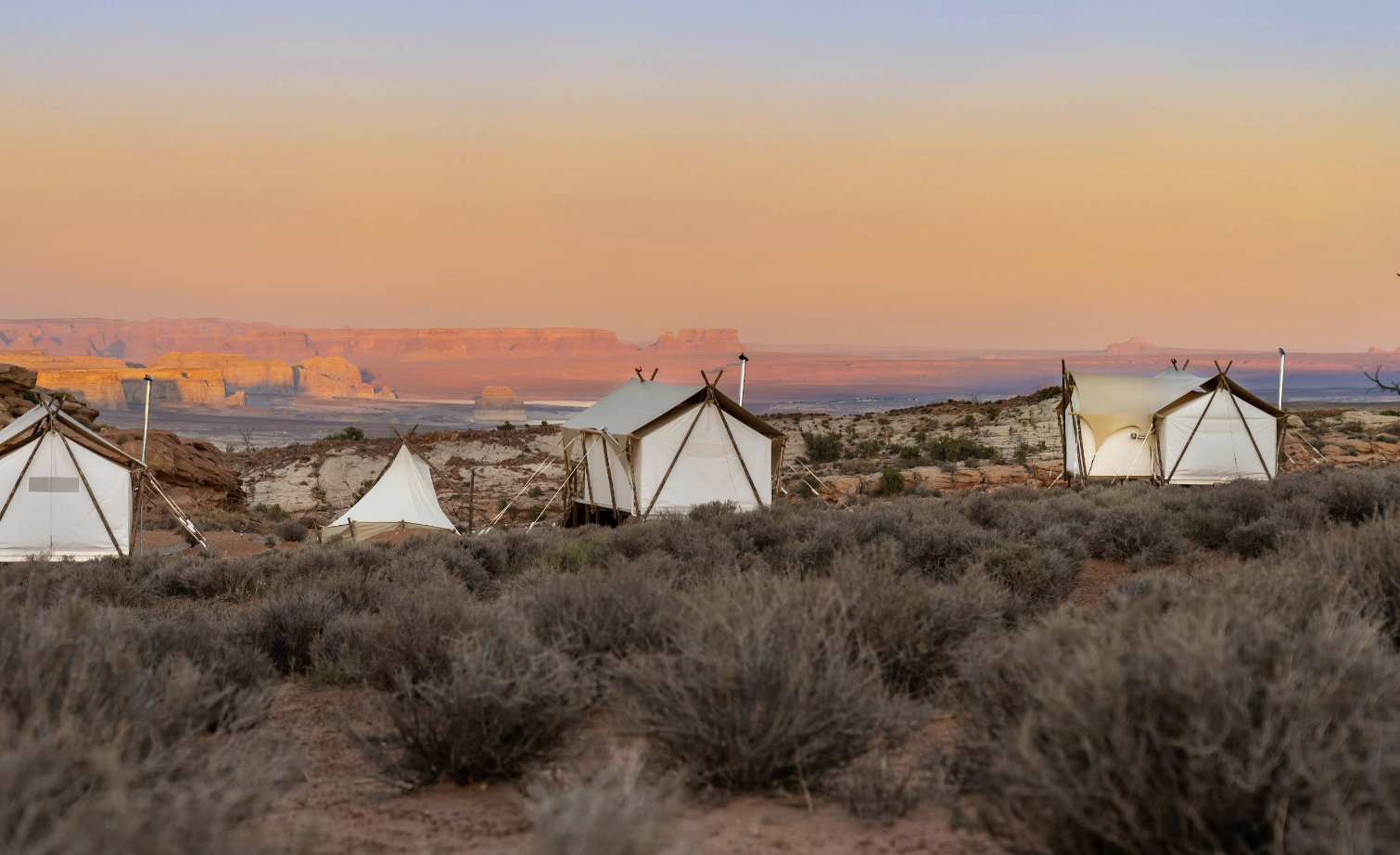
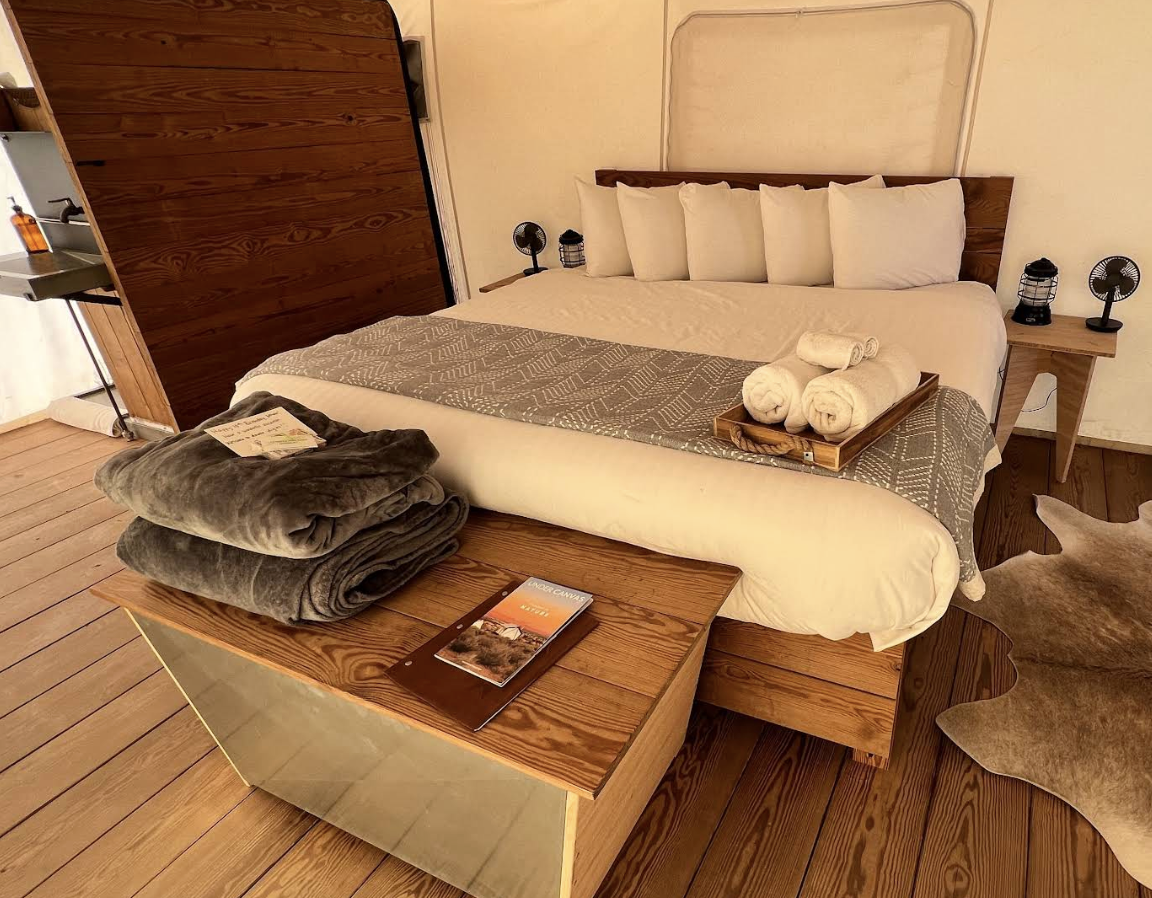
This is a luxury "glamping" wellness destination that focuses on the ESG-friendly traveler. While they don't have a natural hot spring on-site, their "Wellness Tent" and specialized spa treatments are designed to recover the body after a day on the lake.
Water Quality: 5 stars. Pristine, utilize filtered water for all guest services and spa treatments.
Ease of Access: 5 stars. Located right off Highway 89 near the Big Water entrance; very easy to reach for Page visitors.
Ability to be Alone: 4 stars. The "Safari-style" tents are spaced apart to ensure privacy and a "quiet" desert experience.
Water Temperature: 4 stars. Precision-controlled showers and spa pools tailored for comfort.
Health Benefits: 3 stars. Primarily focused on the psychological benefits of "nature immersion" and expert massage therapy.
Nearby Amenities: 5 stars. Features on-site dining, luxury bedding, and curated "adventure" programming.
7. Pah Tempe / La Verkin Hot Springs
Historically known as "Dixie Hot Springs," these springs sit on the banks of the Virgin River. While the formal resort is currently in a state of transition/closure due to water rights and conservation efforts, the springs remain a site of massive geological and cultural importance.
Dixie Hot Springs (historically known as Pah Tempe or La Verkin Hot Springs) has indeed been privatized and transformed from a rustic, natural area into a high-end commercial resort called Zion Canyon Hot Springs.
The original, free-access springs are no longer accessible to the public in their natural state. Instead, the geothermal water is now diverted into a modern $60 million wellness facility that officially opened in mid-2025.
Water Quality: 2 stars. Currently "wild" and unmaintained; the water is sulfur-rich and often cloudy with river sediment.
Ease of Access: 3 stars. Visible from the bridge in La Verkin; access to the water is currently restricted or requires careful local navigation.
Ability to be Alone: 5 stars. Due to the current "closed" status of the formal pools, you are likely to be alone if you find a legal access point.
Water Temperature: 4 stars. Emerges at a consistent 108°F—excellent for deep therapeutic soaking.
Health Benefits: 5 stars. Extremely high mineral content (sulfate, magnesium and lithium); historically sacred to the Southern Paiute for healing.
Nearby Amenities: 3 stars. Located in the town of La Verkin, with gas, food, and basic lodging nearby.
8. Gold Strike Canyon Hot Springs
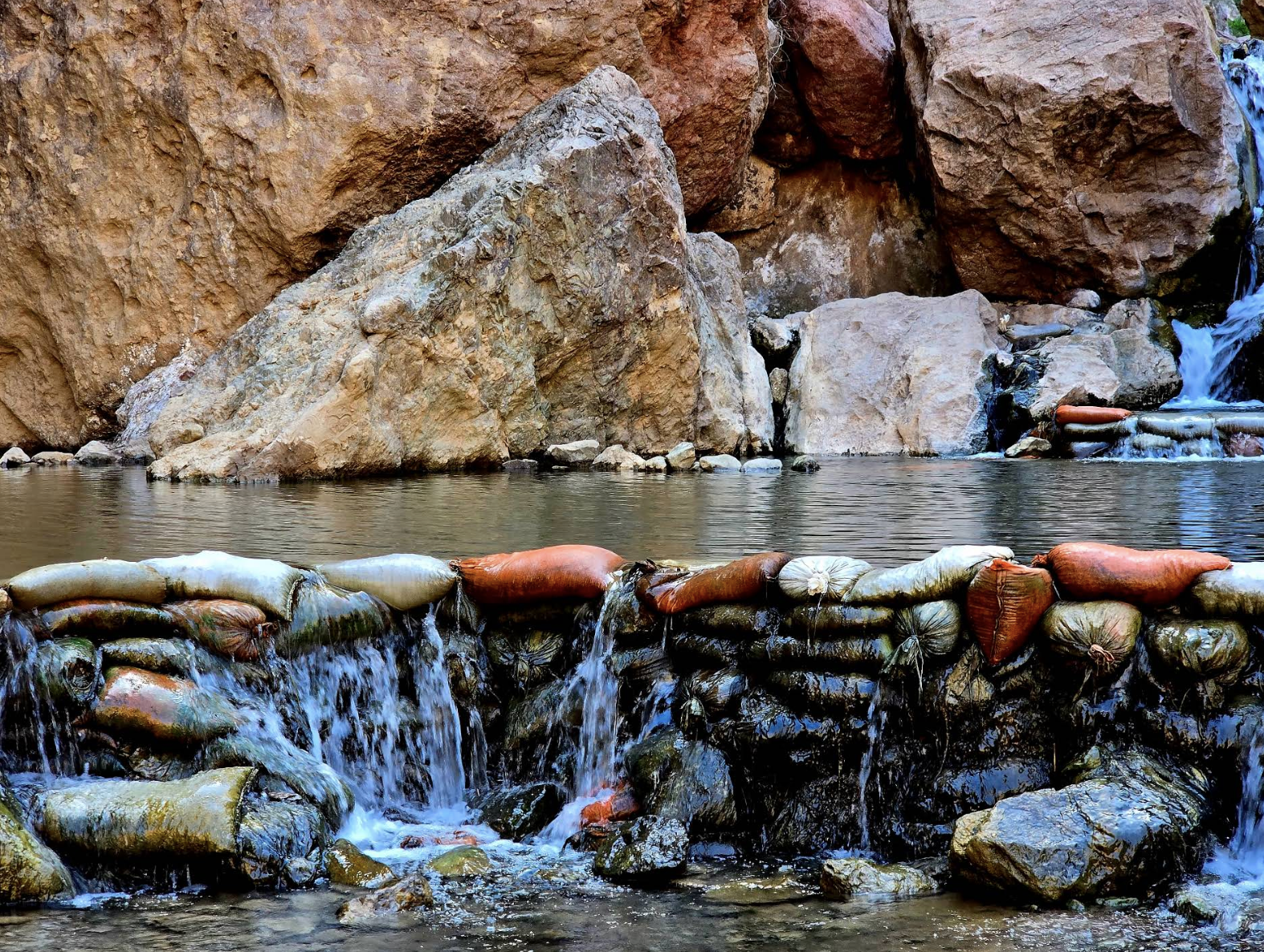
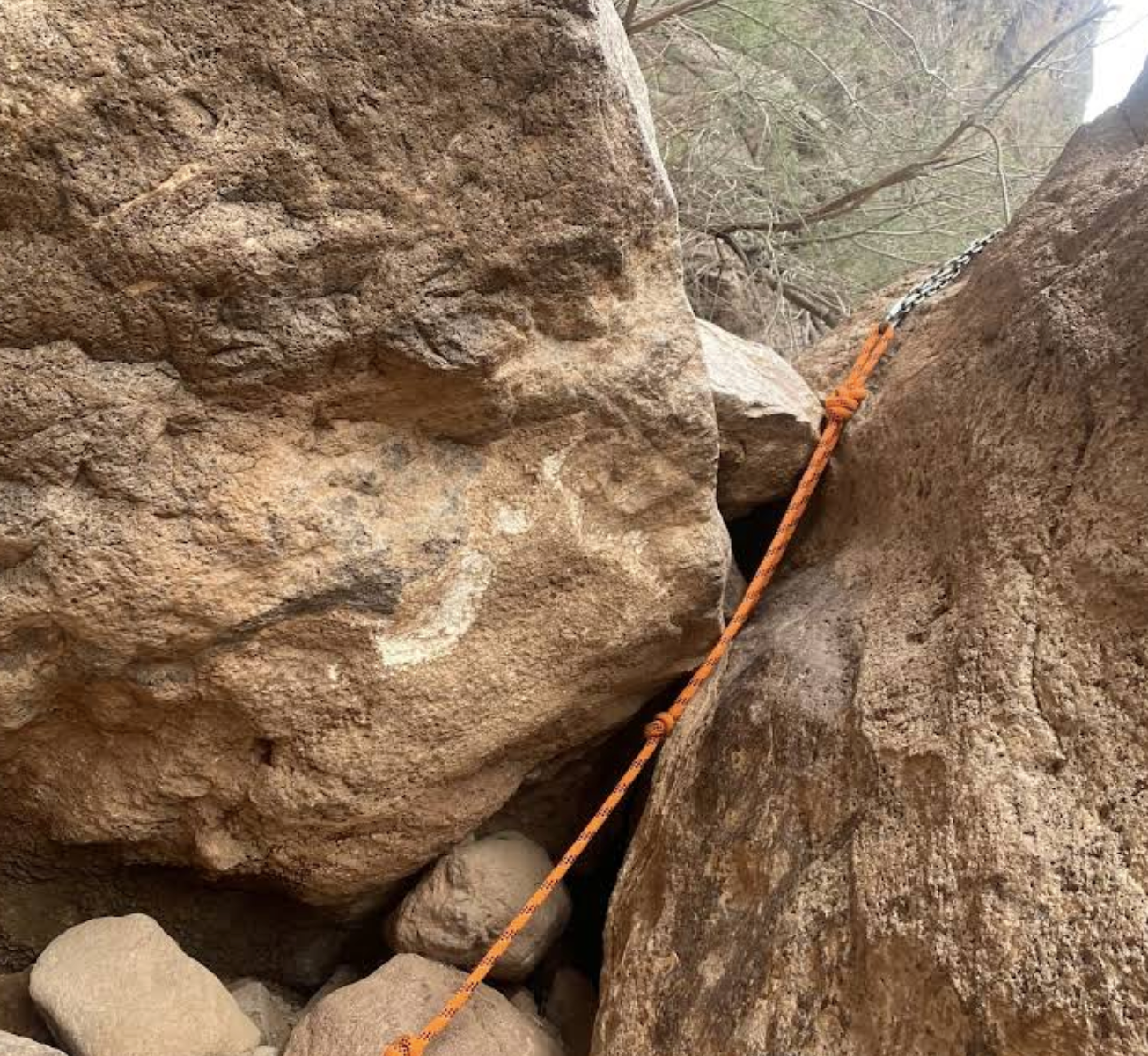
For the adventurous researcher, Gold Strike is the more rugged sibling to Arizona Hot Springs. It involves several rope-assisted scrambles down a boulder-filled canyon to reach a series of hot pools overlooking the Colorado River.
The hiking is kind of difficult, you will need to climb rocks and use ropes that are already there to go down. The return climb on this trail has always been a bit challenging due to the scrambling required.
Took us about 2 hrs to get to the hot springs which is well worth it. It’s about 6 miles round trip from the parking lot. Rugged hike with 1000+ foot elevation gain each way.
After 7 or was it 9 descents, we made it to the first tiny pool under a small waterfall. That is not the one you want to stop at. The larger and hotter pools are just further down the path.
Don't go with children, take water, wear hiking shoes, the rocks are very slippery.
Water Quality: 4 stars. Very clear pools that are naturally filtered through the canyon's volcanic rock layers.
Ease of Access: 1 star. Extremely difficult. Requires multiple rope descents and a 4-mile (round trip) hike that is closed in summer due to extreme heat.
Ability to be Alone: 4 stars. The difficulty of the hike acts as a natural filter; it is much quieter than the nearby Arizona Hot Springs.
Water Temperature: 5 stars. Tiered pools range from 100°F to 110°F; the "final pool" near the river is a stunning reward.
Health Benefits: 4 stars. High sulfur and mineral content; the sheer physical effort required to reach it provides a major endorphin boost.
Nearby Amenities: 1 star. No amenities. This is a high-risk, high-reward wilderness experience.
9. Verde Hot Springs
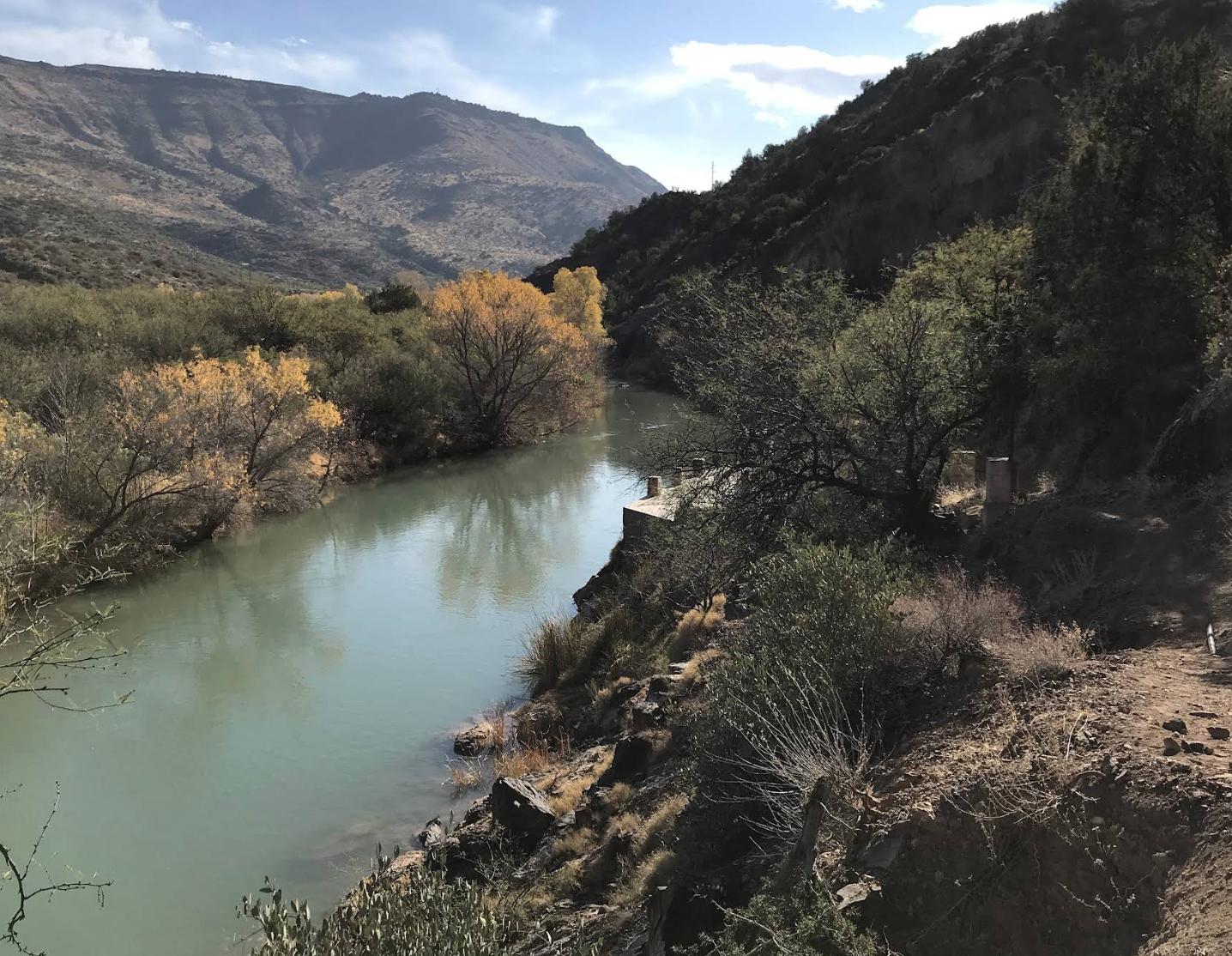
Located in the ruins of a 1920s resort, Verde Hot Springs offers a "post-apocalyptic" wellness experience. It was al capones resort but it was washed away by a huge flood. The main tub is built into a concrete terrace decorated with local art, overlooking the wild Verde River.
Beautiful area with cement hot spring pools, with a drive to get there that I never want to do again. Fossil Creek Road from Strawberry, AZ is CLOSED indefinitely per Coconino National Forest Order - this makes the drive very challenging. 20 slow bumpy mostly one lane primitive road, with lots of hidden view turns with possible other cars coming your way. I’m glad we survived it. Do NOT drive down the last hill past the spot Waze takes you to unless you are camping and have high clearance vehicle. It’s really scary. You will also have to do a river crossing which can be hard in high waters.
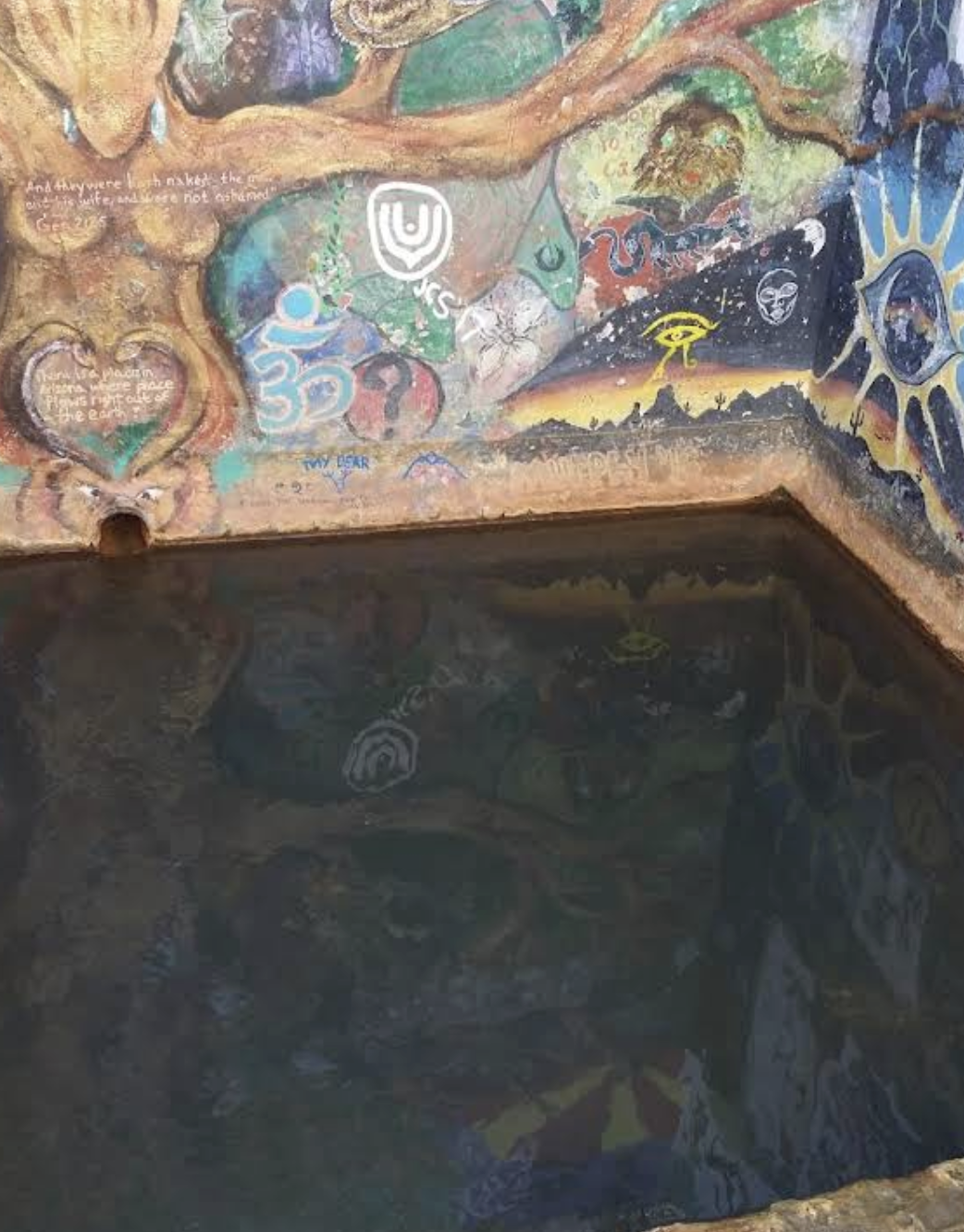
Water Quality: 3 stars. Noticeable algae in the tubs, though the water turnover is decent. It has a "wild" and lived-in feel.
Ease of Access: 2 stars. Requires a long drive on rough forest roads followed by a river crossing and a short hike.
Ability to be Alone: 3 stars. Quiet during the week, but a favorite for "off-grid" enthusiasts on the weekends.
Water Temperature: 4 stars. Stays consistently around 98°F to 100°F—ideal for long, social soaks.
Health Benefits: 4 stars. Good mineral profile; the primary benefit is the "total disconnect" from modern technology.
Nearby Amenities: 1 star. No services. You must be completely self-sufficient.
10. Warm Springs Canyon
Historically, Warm Springs Canyon held major hot springs that were submerged by the filling of Lake Powell. Today, depending on lake levels, "warm seeps" can sometimes be found along the shoreline. It serves as a reminder of what has been lost to the reservoir.
Water Quality: 2 stars. Mixed with lake water; often cloudy with silt and organic debris from the fluctuating reservoir.
Ease of Access: 1 star. Accessible only by boat. You must navigate into the canyon and search for active seeps along the rock walls.
Ability to be Alone: 5 stars. Very few people go looking for these "ghost springs."
Water Temperature: 2 stars. "Warm" rather than "hot" (generally 80°F–85°F), though localized seeps can be warmer.
Health Benefits: 1 star. Primarily a geological curiosity and a site for historical reflection.
Nearby Amenities: 1 star. You are in the heart of the Glen Canyon wilderness.